
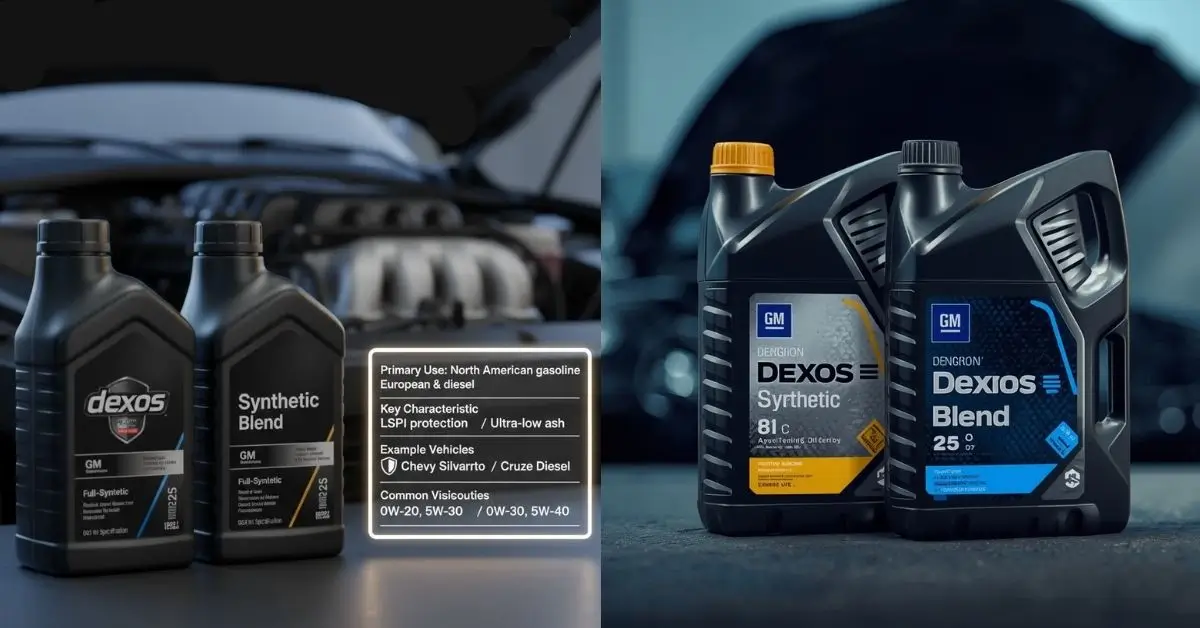
Common Queries
Q1: What is Dexos oil, and do I really need it for my car?
Dexos oil is GM’s certified engine oil that keeps your engine protected and your warranty intact. If your car requires it, skipping Dexos could risk performance and coverage, stick with it for peace of mind.
Q2: Is Dexos2 the same as DexosD?
No, DexosD is for Duramax light-duty diesels; Dexos2 is for other European diesel/gasoline applications.
Q3: Can I mix Dexos oil with conventional oil?
Mixing is not recommended, as it can reduce the protective properties of the certified oil.
Q4: What are the generations of Dexos1?
Gen 1 (discontinued), Gen 2 (LSPI protection), Gen 3 (enhanced fuel economy and deposit control).
Q5: Does Dexos oil improve fuel economy?
Yes, it reduces friction and optimizes viscosity, offering 1.5-2.8% better fuel efficiency than conventional oils.
Q6: Which oil brands are Dexos approved for?
ACDelco, Mobil 1, Castrol Edge, Pennzoil Platinum, Valvoline Advanced, and CAM2 are among the certified brands.
Q7: Is Dexos oil required for all GM vehicles?
Required for 2011+ vehicles for warranty compliance; backward-compatible with older models for added protection.
Table of Contents
Quick Answer
It’s a certified engine oil standard engineered specifically for modern GM engines. It addresses turbocharged engines, direct injection, and low-speed pre-ignition (LSPI) risks.
Introduction
Ever noticed “dexos” on a bottle of motor oil and wondered what is dexos oil? Truth is, millions of GM vehicle owners, DIY mechanics, and fleet managers get confused every year. Understanding what is dexos oil can prevent costly engine repairs, maintain warranty coverage, and even improve fuel economy. According to GM, more than 80% of engine failures linked to oil issues could be avoided by using the correct dexos-certified oils. Experts like ACDelco and Mobil 1 back this claim, highlighting dexos oil’s superior performance under extreme conditions.
What Happens If You Don’t Use Dexos Oil?
Using non-dexos oil in a GM vehicle designed for it can create real headaches. GM clearly states that failing to use the correct dexos-approved oil may void your powertrain warranty and accelerate engine wear.
- Timing Chain Damage: Non-approved oils increase chain stretch by up to 40%, leading to costly repairs.
- Turbocharger Deposits: Turbo components can develop sludge, reducing efficiency and longevity.
- LSPI Risks: Low-Speed Pre-Ignition events can crack pistons and cause $4,000-$8,000 engine repairs.
- Fuel Economy Loss: Vehicles may see 0.5-1 mpg reduction if using non-dexos oils over long periods.
Based on real-world experience, even a single oil change with non-dexos oil can result in minor deposits; repeated misuse compounds the problem. This demonstrates why knowing what is dexos oil is crucial for GM owners.
If you are a completely new GM owner and don’t know anything about dexos then I highly recommend watching this short video:
→”What is dexos oil? What does dexos oil mean? Should you use it? #oil #mobil1 #automotive #engine“
Is Dexos Oil Full Synthetic?
Most dexos-certified oils are full synthetic, but dexos is a performance standard, not a type of oil. While synthetic base oils make it easier to meet GM’s rigorous requirements, some high-quality synthetic blends may also carry dexos approval.
- Synthetic vs. Dexos: Synthetic describes how the oil is made; dexos describes what the oil can do under GM’s tests.
- Performance Checks: Dexos oils pass 17 proprietary tests for wear, oxidation, LSPI, and turbocharger cleanliness.
- Quick Tip: Always check for the dexos logo on the bottle, don’t assume any full synthetic is automatically dexos-approved. Understanding what is dexos oil will help you make informed choices at the store.
What Is the Difference Between Dexos1 and Dexos2?
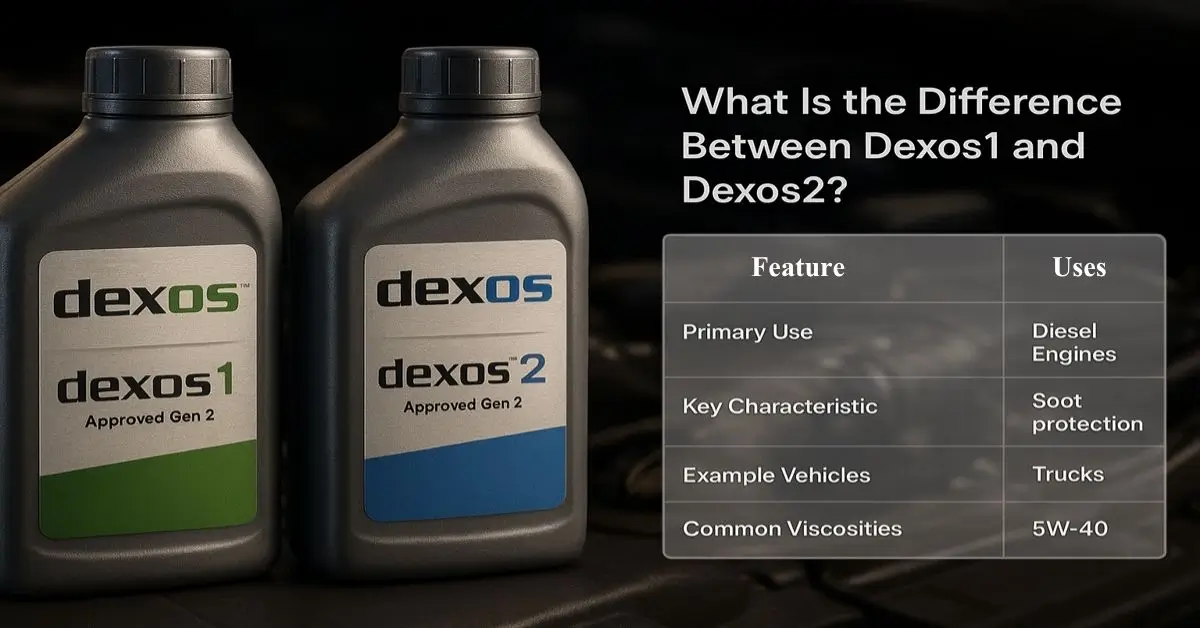
Dexos1 is designed for North American gasoline engines. Dexos2 targets European gasoline and diesel engines, with low-ash formulations for particulate filter protection.
| Feature | Dexos1 | Dexos2 |
| Primary Use | North American Gasoline Engines | European & Diesel Engines with DPF |
| Key Characteristic | LSPI Protection | Ultra-Low Ash Content |
| Example Vehicles | Chevrolet Silverado, Cadillac XT5 | Cruze Diesel, Opel/Vauxhall |
| Common Viscosities | 0W-20, 5W-30 | 5W-30, 5W-40 |
DexosD and DexosR are additional variants for light-duty diesels and high-performance engines, respectively. Using the wrong type can trigger warning lights or reduce engine life. Knowing what is dexos oil ensures you pick the right variant for your GM vehicle.
Can I Use Dexos Oil in a Non-GM Car?
Yes, but with caution. Dexos oils meet or exceed API SP and ILSAC GF-6 standards, making them suitable for many non-GM vehicles. However, always check your vehicle owner’s manual first.
- Compatibility Check: Dexos1 will generally perform well in cars requiring API SP oils.
- European Cars: Verify against ACEA or OEM-specific standards to avoid damaging emissions systems.
- Key Advice: Use dexos-approved oil for peace of mind, especially in turbocharged or modern engines. This is why understanding what is dexos oil is essential even for non-GM vehicle owners.
How Long Does Dexos Oil Last?
Dexos oils support extended drain intervals, typically 7,500-10,000 miles under normal driving conditions, sometimes longer based on GM’s oil life monitoring system.
- Severe Driving: Short trips, towing, dusty conditions, or extreme temperatures may require changes at 5,000-7,500 miles.
- High-Mileage Vehicles: Engines over 100,000 miles may need more frequent oil changes regardless of oil type.
- Fleet Insight: Companies report 20-30% fewer oil changes per year, saving on labor and product costs.
Knowing what is dexos oil helps fleet managers and DIY mechanics plan proper service intervals.
Is Dexos Oil Worth the Extra Cost?
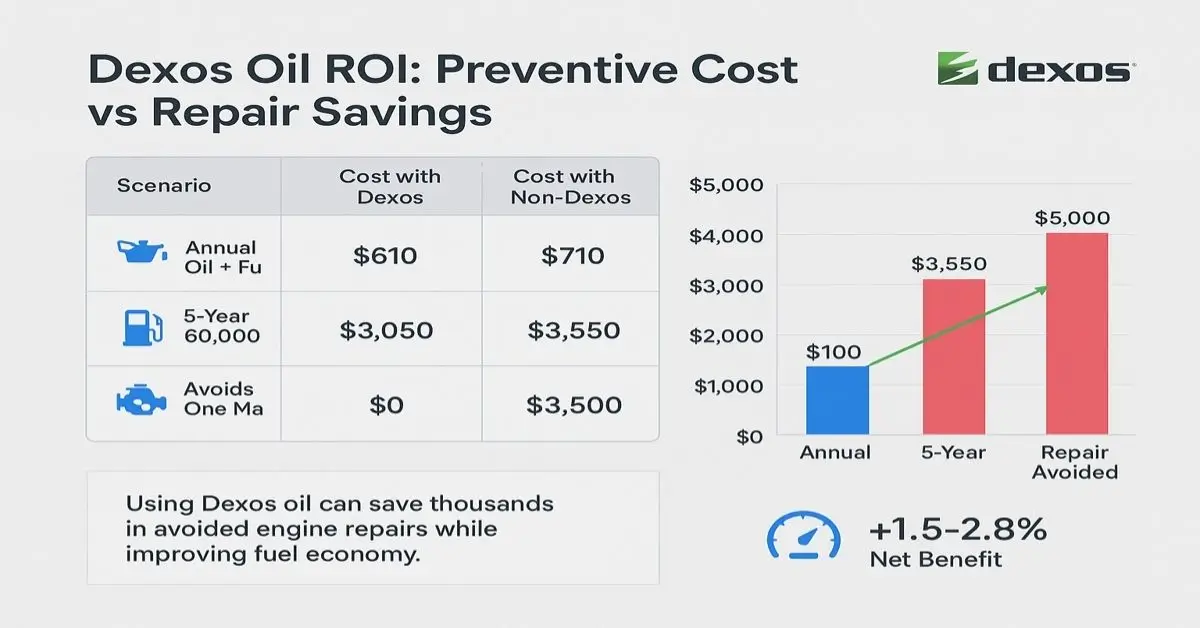
Yes. Dexos oil provides measurable value in engine protection, warranty assurance, and long-term savings.
- Financial Perspective: Slightly higher upfront cost ($6.99–$9.95/quart) can prevent $2,000-$8,000 repairs.
- Fuel Economy: Reduces friction, improving efficiency by 1.5-2.8%, translating to $75-$150 annual savings.
- Peace of Mind: Maintains warranty compliance and ensures engine longevity.
Fleet & Shop Implementation Guide
For fleets and repair shops, understanding dexos oil ensures operational efficiency and satisfied customers.
Fleet Managers:
- Audit GM vehicles requiring dexos oils.
- Standardize purchases with approved brands for bulk savings.
- Document oil changes for warranty protection.
Auto Shops:
- Train staff to explain dexos benefits clearly.
- Use scripts to upsell premium oils responsibly: “This oil prevents turbo damage and keeps your warranty valid.”
Understanding what is dexos oil helps shops educate customers and reduce warranty claims.
What Is the Difference Between Dexos and Synthetic Blend?
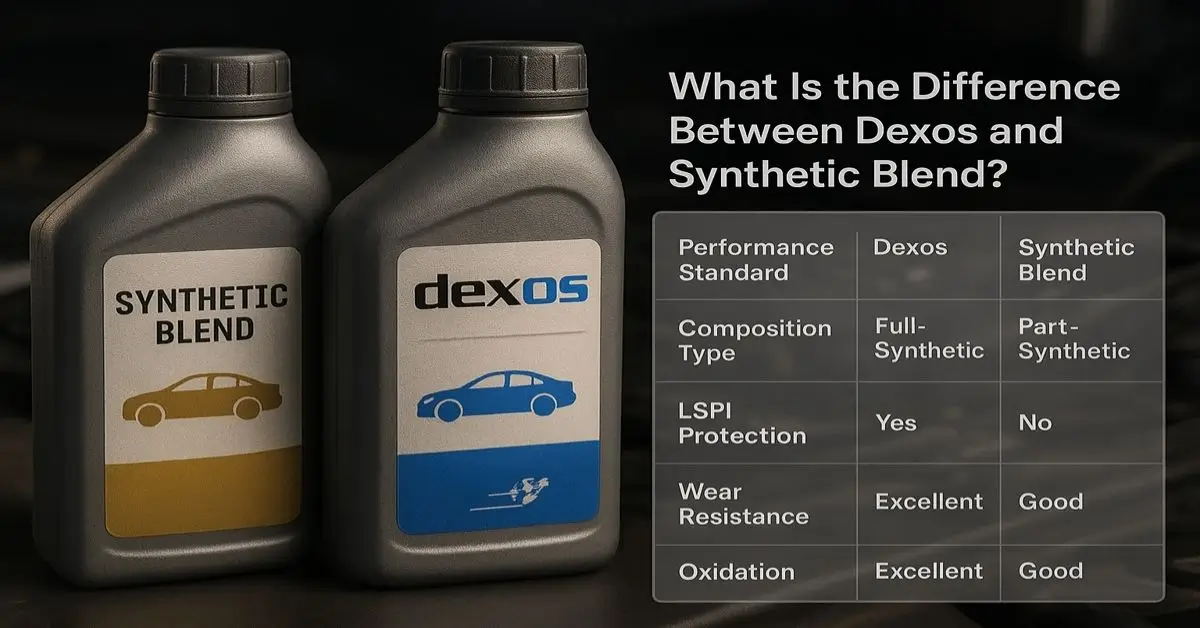
Dexos = performance standard.
Synthetic blend = composition type (part conventional, part synthetic).
- A synthetic blend could be dexos-approved if it passes GM tests.
- Most dexos oils are full synthetic to meet LSPI, wear, and oxidation benchmarks.
Think of it like comparing a custom-engineered racing engine (Dexos) to a standard car engine (synthetic blend) both may run, but only one meets the rigorous GM standard. Knowing what is dexos oil clarifies this difference clearly.
Conclusion
What is Dexos oil is more than just a label, it’s a certified standard ensuring engine protection and optimal performance for GM vehicles. Using Dexos-compliant oils can prevent wear, reduce maintenance costs, and safeguard your warranty. For anyone serious about long-term engine health, choosing the right Dexos oil is a smart, informed decision.
Sources
- Performance Plus Oil: What is Dexos? Motor Oil Specs By General Motors (GM), 2023-03-20
- Rick’s Free Auto Repair Advice: Understanding Dexos oil: The Standard for GM Engine Oils, 2024-08-25
- Lubricants 101: What does Dexos mean?, 2024-06-08
- J.D. Power: What Is Dexos Oil?, 2022-12-08
- Cenex: Dexos1 Gen 2: What you need to know, 2025-10-18
Author Bio
Jordan Whitfield is a Certified Automotive Technician with an experience of 12 years in powertrain systems and engine maintenance. Specializes in GM engines, maintenance best practices, and translating technical standards into actionable advice for vehicle owners and professionals.