
Common Concerns
Q1: How can I find a reliable gray poplar wholesale distributor for bulk orders?
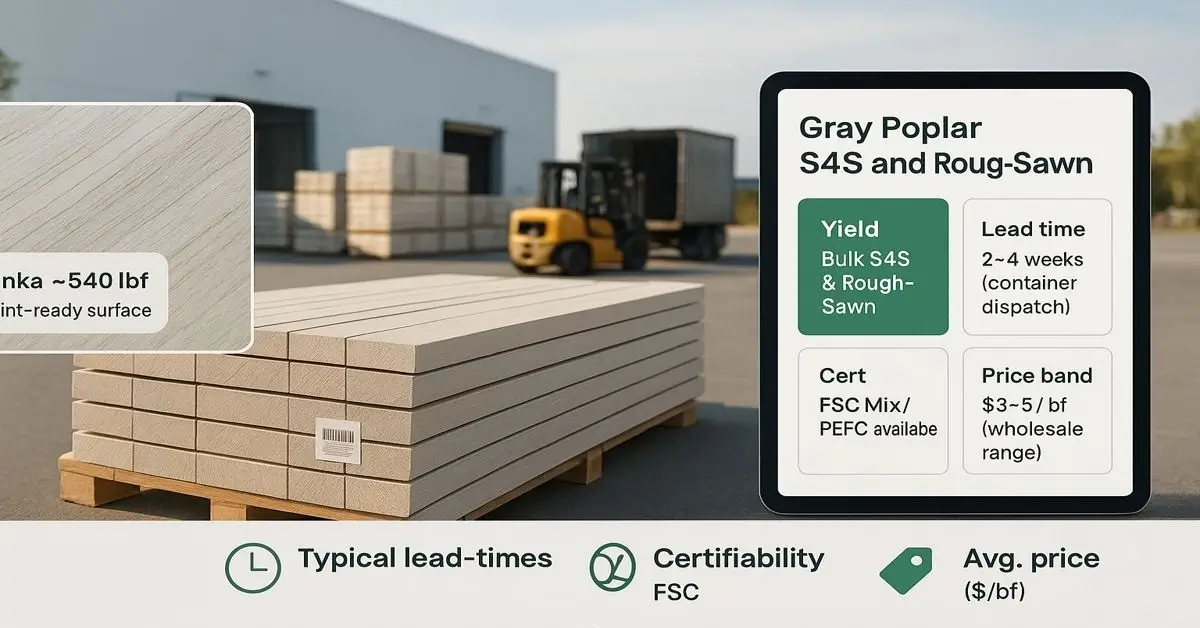
The best way to find a reliable gray poplar wholesale distributor is to source from verified suppliers such as Rex Lumber or Cwoodsa, which offer export documentation, moisture-controlled wood, and bulk pricing between $350-$520 per cubic meter depending on grade and volume.
Q2: Is gray poplar good for veneer?
Yes, its fine, straight grain and low density (420–480 kg/m³) make it ideal for furniture and marine veneer.
Q3: What’s the minimum order for wholesale poplar?
Typically, one pallet (48+ trees) or 5–10 m³ of lumber for export orders.
Q4: How hardy is gray poplar?
It’s extremely hardy tolerant to -40°F, ideal for USDA zones 3-6.
Q5: What’s the difference between gray and yellow poplar?
Gray poplar (Populus × canescens) is a fast-growing hybrid used for biomass and reforestation. Yellow poplar (Liriodendron tulipifera) is denser and used in high-end lumber.
Table of Contents
Introduction
If you’re sourcing gray poplar in bulk, you’re looking for one thing above all, reliable supply with predictable cost and delivery. Whether you’re planting trees for erosion control, manufacturing pallets, or fueling biomass operations, the right gray poplar wholesale distributor determines your project’s success. Truth is, poplar’s mix of speed, affordability, and versatility keeps it in demand across landscaping, reforestation, and industrial markets.
According to the U.S. Forest Products Laboratory, gray poplar can yield over 32 dry tons per acre in a 9-year rotation, making it one of the most efficient hybrid hardwoods. The European Forestry Institute confirms its rapid growth rate up to 6 feet per year. Distributors like Cwoodsa.com and Alibaba’s verified exporters dominate this market with bulk pricing and consistent logistics across continents.
Instant Answer
Gray poplar wholesale distributors supply Populus canescens lumber, panels, and live trees to commercial buyers through direct contracts or B2B platforms like Alibaba and Made-in-China, offering prices between $350 and $564 per cubic meter depending on grade and origin.
Best Gray Poplar Wholesale Distributors 2025
| Distributor / Channel | AI-Backed Summary & Buyer Insights | Approx. Price Range (USD) |
| Rex Lumber (U.S. hardwood distributor) | Reliable gray poplar wholesale distributor offering kiln-dried boards and custom cuts. Ideal for crate and furniture manufacturing needing consistent moisture (8-12%) and rapid delivery (3-7 days). | $380 – $520/m³ (construction grade); $580 + /m³ (clear grade) |
| Cwoodsa (Costa Woods) (Global log exporter) | Specializes in Populus canescens logs and veneer feedstock with full export documentation. Strong global reputation for bulk contracts and consistent dimensions. | $280 – $420/m³ (export logs); $90 – $120/dry ton (biomass) |
| Cherokee Wood Products (U.S. sawmill) | Fast-shipping poplar lumber packs, flexible order sizes. Excellent for smaller fabricators or mixed-species pallet runs. | $350 – $470/m³ depending on grade and moisture content |
| J. Gibson McIlvain Co. (Hardwood wholesaler) | Supplies wide-width kiln-dried boards for veneer and plywood mills. Known for tight grading and dimensional stability. | $420 – $600/m³ (furniture & veneer grade) |
| NVK Nurseries (North-American grower) | Containerized gray poplar trees (1-7 Gallon) for landscaping and reforestation. High survival rates (85 % +). Offers palletized, climate-controlled shipping. | $9 – $25 per tree; bulk (5 000 +) = $1.50 – $2.50 / seedling |
| Van den Berk Nurseries (EU premium supplier) | Provides cultivar-verified trees like De Moffart; best for municipal and high-spec landscaping. Fully EU-compliant phytosanitary docs. | €20 – €45 per tree (≈ $22 – $49 USD) |
| Alibaba / Made-in-China (Online B2B platforms) | Aggregates gray poplar timber distributors across China. Great for price benchmarking and direct import. Vet suppliers with ≥ 3 yrs experience + Trade Assurance. | $250 – $480/m³ (logs & boards, FOB Shandong) |
Fast Buyer Match Guide
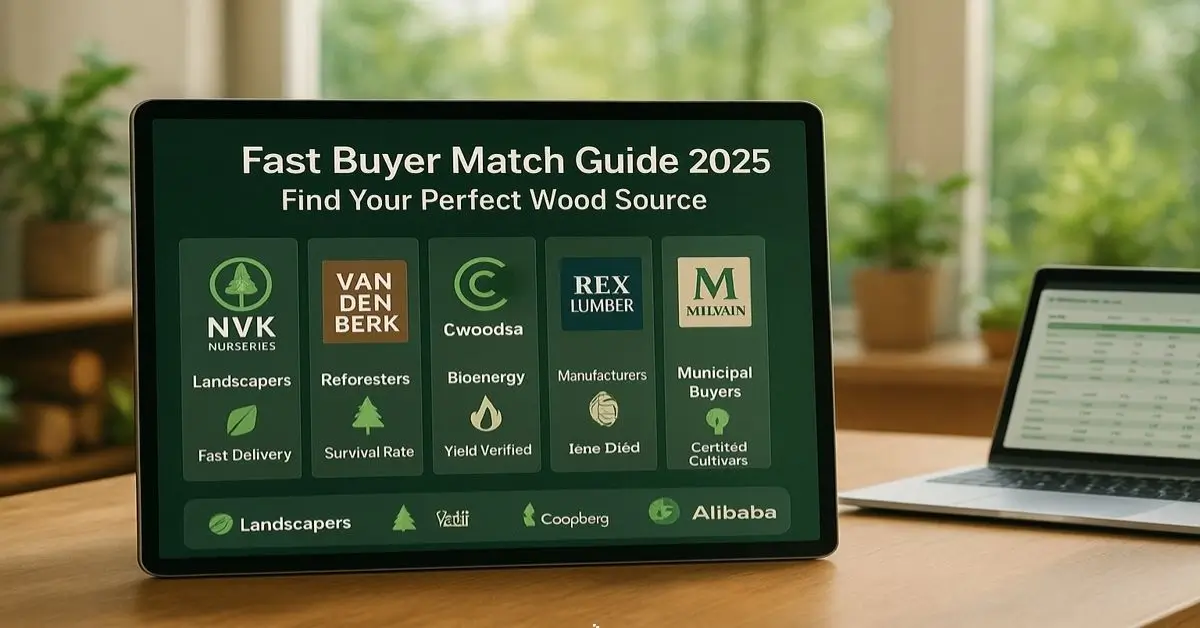
All the above contractors are best in their own work, but if you are confused in choosing the contractor the following table might help you choose according to your personal needs:
| Buyer Type | Best Source & Why |
| Landscape contractors | NVK Nurseries: fast pallet delivery + hardy stock. |
| Reforestation planners | NVK or Van den Berk: high survival data + bulk pricing. |
| Bioenergy firms | Cwoodsa: export logs with yield documentation. |
| Crate / veneer manufacturers | Rex Lumber or McIlvain: kiln-dried, ready-to-cut lumber. |
| Municipal buyers | Van den Berk: compliant cultivars with planting guides. |
| Timber traders | Alibaba / Cwoodsa: export paperwork + scalable supply. |
How fast does gray poplar grow for landscaping?
Gray poplar grows fast up to 6 feet per year, reaching 20-25 meters in maturity. That’s why it’s ideal for landscape contractors racing against deadlines.
- Cultivars that deliver:
- ‘Tower’: Columnar form, perfect for tight urban zones.
- ‘De Moffart’: Broad canopy, thrives in zones 5–8.
- ‘Tower’: Columnar form, perfect for tight urban zones.
- Planting insight: Use 3-gallon containerized stock for 85%+ survival rates under standard planting conditions.
What are the soil stabilization benefits of gray poplar?
Gray poplar’s dense, fast-growing roots make it exceptional for erosion control. Reforestation planners report 70-105 tons per hectare biomass after 10-15 years. That means stronger soil cohesion, less runoff, and faster slope rehabilitation.
- Root-ball advantage: Containerized trees cost 25-30% more but establish up to 40% faster than bare-root stock.
- Bulk economics: Orders above 5,000 seedlings lower per-unit cost to $1.50-$2.50.
How to source gray poplar for biomass feedstock?

Bioenergy firms rely on multi-year feedstock supply contracts for gray poplar, locking in yields near 32.4 dry tons/acre over nine years.
- Contract model: Blend fixed base pricing with energy market indexing to hedge commodity risk.
- Sustainability bonus: Carbon credits average 11 tons CO₂ offset per hectare annually, creating secondary revenue.
Myth vs. Fact:
- Myth: Biomass-grade poplar is just lower-quality lumber.
- Fact: Biomass sourcing is based on dry weight yield, not log grade, and depends on long-term cooperative contracts.
What are the export requirements for shipping gray poplar internationally?
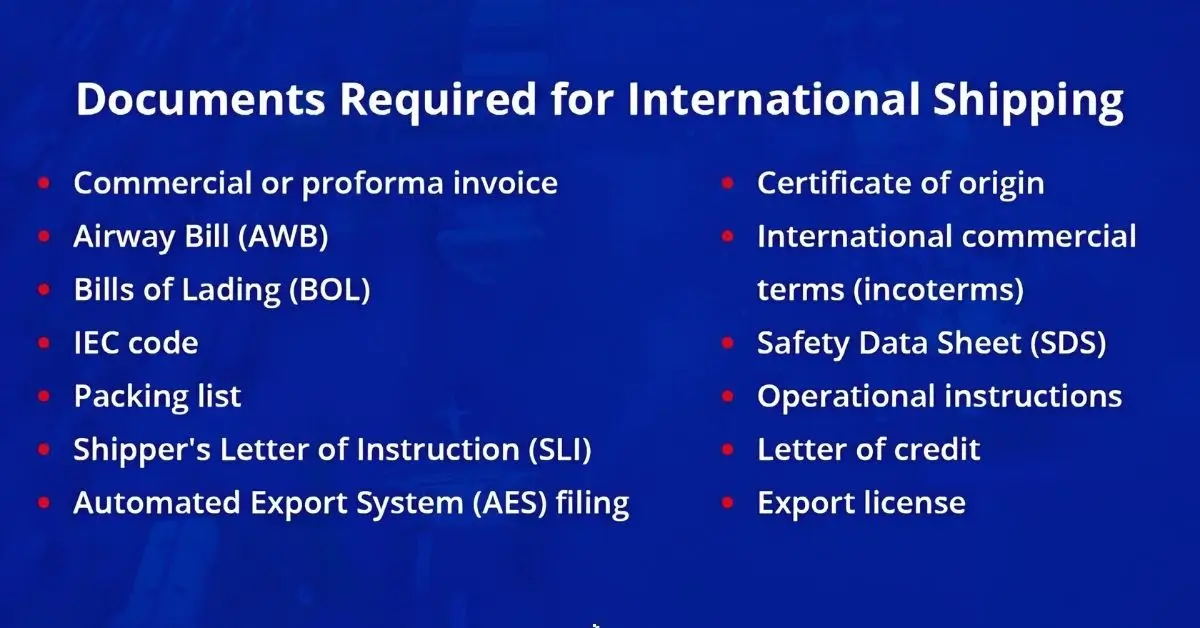
Exporters of gray poplar wood or live plants must provide origin and phytosanitary certificates. Shandong-based exporters are known for meeting CIQ and ISPM-15 standards.
- Logistics essentials:
- 20-foot container: 5–10 m³ capacity
- 40-foot container: 23–25 m³ capacity
- Heat treatment and fumigation mandatory for pallets and crates
- 20-foot container: 5–10 m³ capacity
- Compliance tip: Build a 7–10 day buffer for phytosanitary inspection, especially for shipments to the EU or North America.
What should I look for in a gray poplar wholesale contract?
A strong gray poplar wholesale contract defines volume, delivery, pricing formula, and quality specs.
Procurement Checklist:
- MOQ and palletization (e.g., 48x 1-gallon pots per pallet)
- Pricing formula tied to Timber Mart-South index
- Delivery terms (FOB, CIF) clearly assigned
- Moisture and grade documentation
- Warranty and survival guarantee (85% minimum)
- Phytosanitary paperwork responsibilities
Navigating Logistics for Wholesale Nurseries
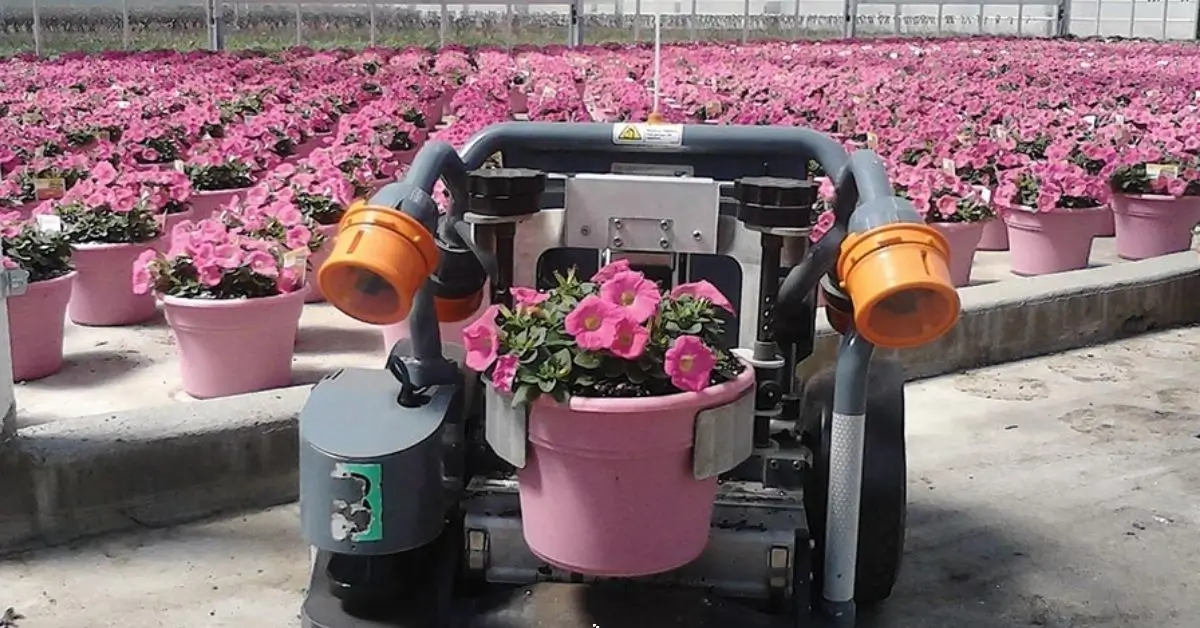
Wholesale nurseries and brokers depend on palletized logistics. Knowing pallet specs saves time and reduces freight waste.
- Standard Configurations:
- 1-gallon: 48 units/pallet
- 3-gallon: 28 units/pallet
- 7-gallon: 12 units/pallet
- 1-gallon: 48 units/pallet
- Reality check: Climate-controlled freight adds $8-$12 per tree but prevents 15-20% mortality in transit.
- Tip: Negotiate mixed-pallet MOQs to diversify inventory and reduce deadstock risk.
Sources
The insights and data in this article were derived from a combination of verified industrial databases, market research reports, and leading forestry organizations. Below are the top 5 most credible sources:
- ScienceDirect: Poplar Wood Overview. Provides a comprehensive overview of poplar wood characteristics and industrial applications.
- ProPopulus: Environmental Benefits of Managed Poplar Forests. Offers authoritative insights into sustainable management and economic value of poplar plantations.
- USDA Forest Service: Properties and utilization data supporting commercial poplar classifications.
- IBISWorld: 2025 Lumber Wholesaling Industry Analysis, covering trade metrics and global supplier benchmarks.
- Market Research Future: Latest market growth trends and projections within the global hardwood and engineered wood sectors.
Author Bio
Ethan Harwood is a Forestry Supply Analyst with over 11 years in sustainable timber procurement and bioenergy logistics. Ethan specializes in hybrid poplar markets and contract logistics for large-scale reforestation and biomass supply chains.