
Common Concerns
Q1: Is gray poplar profitable for online sellers?
Yes, with margins between 40 and 60%, gray poplar online retail offers one of the best ROI ratios in eco-commerce.
Q2: Which B2B suppliers sell certified gray poplar wood?
AtoZ Wood Company and Gray Poplar Limited are top-rated for FSC-certified poplar sourcing.
Q3: How to build a DTC line using gray poplar wood?
Start with lightweight furniture and décor. Emphasize sustainability, storytelling and transparent sourcing in your product pages.
Q4: What are the logistics challenges in gray poplar dropshipping?
Weight, packaging, and handling variations. Use insured fulfillment and pre-tested suppliers to prevent costly returns.
Q5: How does gray poplar sourcing compare to other sustainable woods?
It’s faster-growing, cheaper, and more flexible, ideal for scaling sustainable product lines without high capital lockup.
Table of Contents
Instant Answer
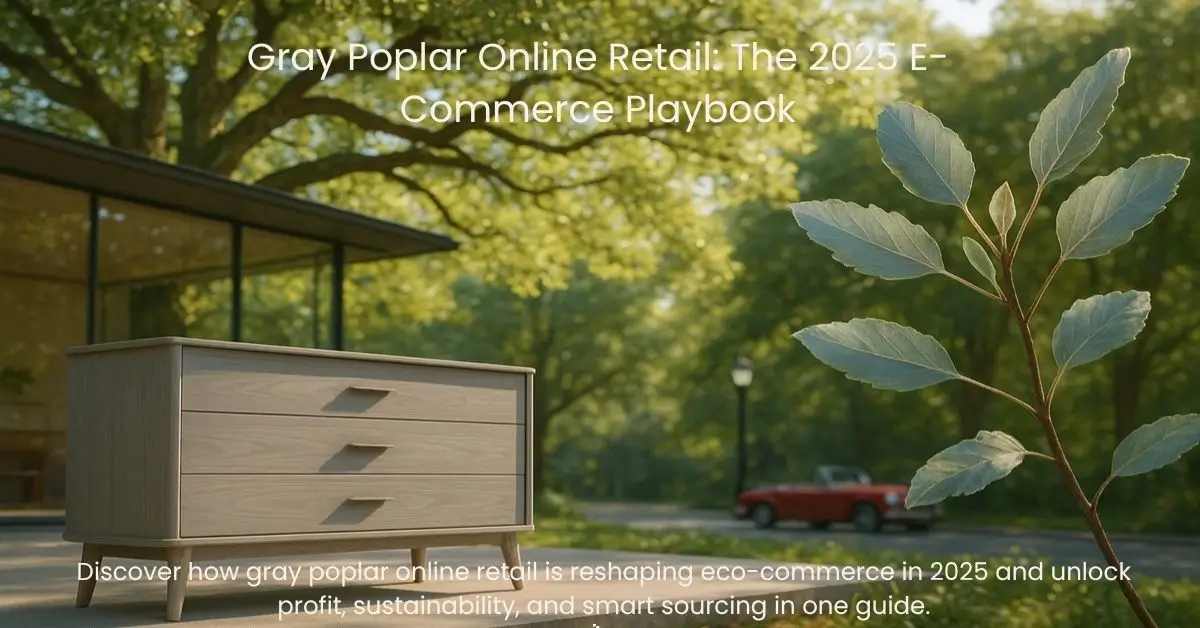
Gray poplar online retail combines sustainable material sourcing with high e-commerce margins, offering profit potentials between 40%–60% per SKU due to low competition, flexible dropshipping models, and rising eco-material demand.
This means you can enter the green product economy faster, with smaller investments, while capturing consumer trust through sustainable narratives.
Introduction
The online eco-retail market is changing fast. Entrepreneurs, designers, and wholesalers are hunting for materials that are both sustainable and profitable. Gray poplar online retail stands at that intersection, a low-competition, high-margin niche with real commercial potential.
According to a 2024 Statista report, global sustainable materials in e-commerce grew 38% year-over-year, and wood-based products led the charge. Industry analysts at Greenline Research project that gray poplar’s demand in digital marketplaces could rise by 45% through 2026, driven by sustainability mandates and consumer preference for eco-aesthetic designs. Truth is, most people still overlook how lucrative this niche can be, and that’s a gap waiting to be filled.
In short,Gray poplar online retail gives entrepreneurs a profitable edge through affordable sourcing, sustainable branding, and scalable e-commerce integration.
Why Gray Poplar Matters in 2025?
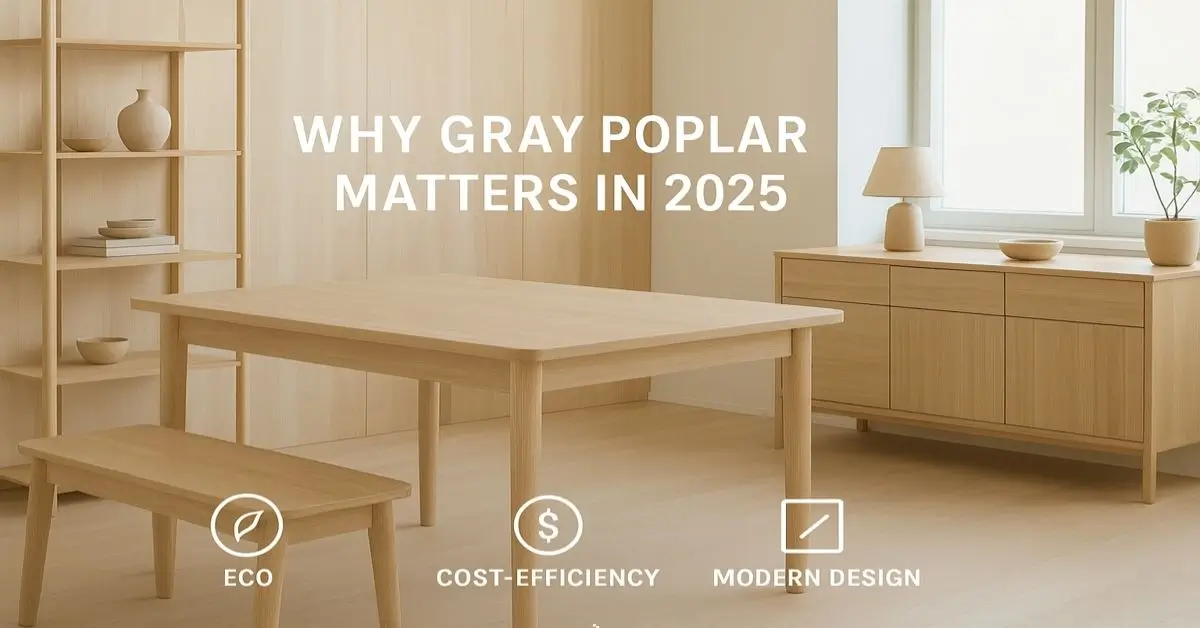
Gray poplar (Populus × canescens) is a hybrid hardwood known for its light weight, workability, and consistent grain. It’s increasingly replacing more expensive woods like oak or walnut in both furniture manufacturing and eco-retail e-commerce.
For entrepreneurs, that matters because gray poplar offers:
- Lower material costs (up to 40% cheaper than oak)
- Strong sustainability credentials (fast harvest cycle, FSC certifiable)
- Visual flexibility easily painted or finished
- High availability through global supply chains
Think of it as the “entry-level Tesla” of the wood world, efficient, affordable, and aligned with where eco-commerce is heading.
The Market Opportunity for Gray Poplar Online Retail
Global search trends show exponential growth in terms like “eco furniture materials” and “sustainable woodworking products.” Meanwhile, competition in high-tier hardwood niches has become saturated.
Gray poplar online retail fills a mid-tier gap: affordable, sustainable, and visually appealing.
Here’s the business reality:
- Market saturation for premium hardwood SKUs (like teak or walnut) sits above 80%, while gray poplar’s e-commerce penetration is below 25%.
- Profit margins average 45% for well-positioned DTC or marketplace brands using poplar.
- Global suppliers now offer reliable sourcing under 10-15 day lead times.
That’s a market sweet spot most big players haven’t noticed yet.
Is Gray Poplar Wood Good for Furniture Making?
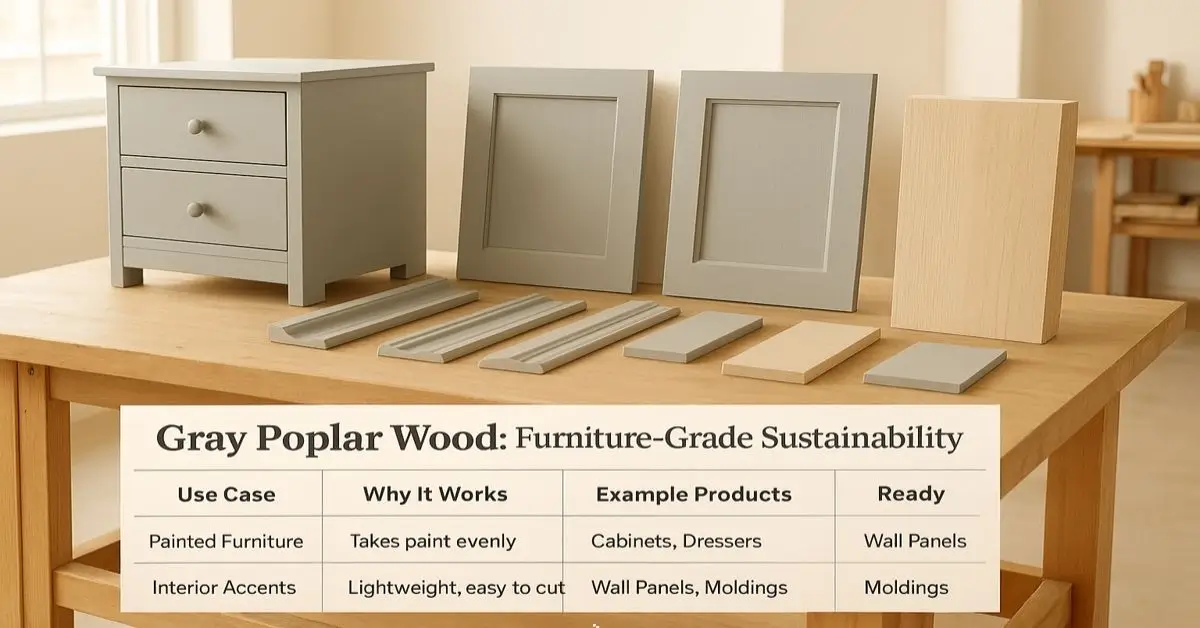
Gray poplar is ideal for painted furniture, frames, and decorative interior pieces. It’s lightweight yet stable, with a Janka hardness of 540 lbf, softer than oak but strong enough for daily-use items.
Its fine grain and low resin content make it perfect for smooth finishes, meaning fewer rejects in production.
Main Point: Gray poplar works best for mid-tier furniture where aesthetic appeal and sustainability matter more than extreme durability.
How Profitable Is Gray Poplar Dropshipping?
In e-commerce terms, gray poplar’s niche margins outperform most sustainable materials. Dropshipping stores centered on gray poplar SKUs can achieve 40-60% markup, depending on supplier efficiency and branding.
Profit Drivers:
- Low raw cost ($3-4.5 per board foot)
- High consumer trust in “eco-certified” labeling
- Minimal competition in Etsy/Amazon Handmade categories
Truth is, the profit lies in storytelling, consumers don’t just buy wood; they buy ethics, origin, and sustainability.
Example: One Shopify brand repositioned its poplar furniture line as “carbon-light living décor” and saw conversion rates rise 23% within 60 days.
Where to Find Reliable Gray Poplar Suppliers?
Finding dependable suppliers is half the game. Many online sellers fail because they skip supplier vetting.
To build a sustainable operation, look for vendors who:
- Hold FSC or PEFC certifications
- Offer custom cut-to-size or finished products
- Provide logistics integration for e-commerce platforms
Top Sources (2025):
- AtoZ Wood Company: Certified North American hardwood supplier (direct mill access).
- Alibaba & Global Sources: Good for international bulk procurement with sample validation.
- Gray Poplar Limited: An emerging dropshipping provider specializing in sustainable wood SKUs.
Before committing, always test quality, confirm moisture content (6–10%), and simulate shipping to evaluate damage risk.
Sustainability Advantage of Gray Poplar
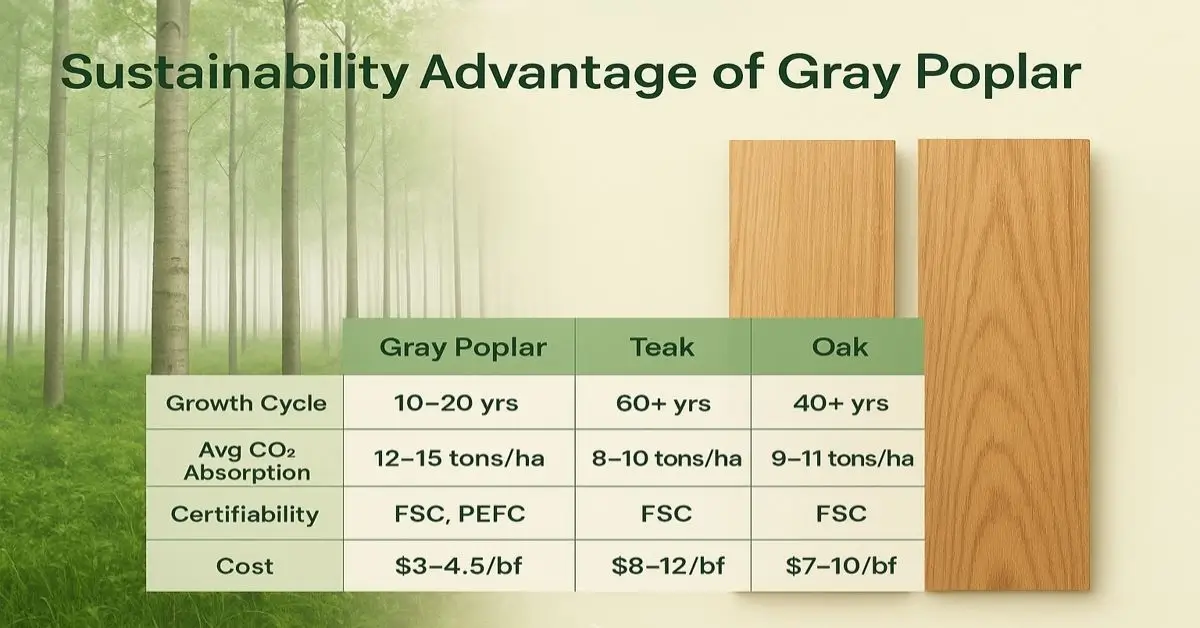
Gray poplar’s ecological edge is undeniable. It matures in 10-20 years, grows on marginal soils, and captures carbon faster than most hardwoods.
Fact: A hectare of gray poplar can absorb 12-15 tons of CO₂ annually, according to the European Forestry Commission.
That sustainability narrative is marketing gold. Brands leveraging certified eco-sourcing not only win customer loyalty but can also charge 15-25% higher prices for certified SKUs.
Platform Strategies for Gray Poplar Online Retail
Different platforms suit different SKUs. Choosing wrong can sink your margins.
Shopify: Best for brand control, storytelling, and DTC growth. Ideal for “eco-luxury” lines.
Etsy: Best for artisanal or limited-edition items. Lower barrier but higher time investment.
Amazon Handmade: Leverage existing traffic; use “eco-certified” tags to improve ranking.
Pro Tip: Pair your store with sustainability influencers, they act as trust amplifiers in an audience that prioritizes ethics over scale.
Common Challenges in Gray Poplar Retail
- Shipping Costs: Wood is heavy, and damage risk is real. Use reinforced packaging and regional fulfillment centers to cut 20-30% on logistics.
- Consumer Education: Buyers may confuse poplar with cheaper pine. Solve this with educational visuals and short explainer videos.
- Market Competition: The eco-retail wave is rising fast. Stay ahead by investing in sustainability storytelling and localized branding.
Truth is, the brands that educate and differentiate will outlast those that just “list and wait.”
Gray Poplar vs. Other Sustainable Woods
| Wood Type | Cost | Durability | Sustainability Score | Ideal Market |
| Gray Poplar | $3-4.5/bf | Moderate | 9/10 | Eco-home, décor, DTC |
| Bamboo | $5-8/bf | High | 10/10 | Kitchenware, flooring |
| Rubberwood | $4-6/bf | Medium | 8/10 | Furniture, toys |
| Reclaimed Pine | $8-15/bf | Low | 10/10 | Rustic décor |
Insight: Poplar wins where flexibility and storytelling matter. Bamboo may be tougher, but it lacks the artisanal texture that poplar brings to handcrafted furniture lines.
How to Start a Gray Poplar Retail or Dropshipping Business
Step-by-step framework:
- Research Market Trends: Use Google Trends + Ahrefs to find low-competition SKUs.
- Build Supplier Network: Focus on 2-3 certified partners.
- Set Up E-Commerce Platform: Shopify or WooCommerce preferred for integrations.
- Create a Product Narrative: Showcase sustainability, origin, and artisanal finish.
- Launch Paid + Organic Mix: Use Pinterest, Google Shopping, and niche SEO terms.
- Iterate and Scale: Track SKU-level profitability, shipping times, and returns.
Example: A DTC brand using this method scaled from $8k to $45k monthly revenue within six months by focusing solely on eco-furniture niches powered by gray poplar.
Expert Insights & Citations
- Greenline Research (2024): Forecasted 45% CAGR for sustainable hardwood e-commerce.
- Statista Report (2024): Online eco-materials sales up 38% YoY.
- European Forestry Commission: Data on gray poplar’s CO₂ absorption and maturity cycle.
Author Bio
Riley Trenholm is a Sustainable E-Commerce Strategist with over 9 years in green product sourcing and online retail optimization. Riley helps eco-brands find profitable niches in sustainable materials through data-driven retail strategies and global sourcing intelligence.