
Key Intake
Q1: Who are the top prospects in the class of 2029 basketball rankings?
Flory Kuminga, Malachi Miller, and Ethan Riullano headline early rankings based on verified metrics and game performance.
Q2: How do sites rank 2029 basketball recruits?
They evaluate skill performance, physical metrics, and coach feedback across tournaments and exposure events.
Q3: Which players rose in 2029 rankings recently?
Wings and hybrid guards who improved 3-point consistency and defensive versatility rose fastest, according to Prep Hoops updates.
Q4: How to compare 2029 prospects by position?
Compare scoring efficiency, rebounding rate, and defensive metrics within positional groups point guards, wings, or power forwards.
Q5: Which events matter for 2029 scouting?
Elite 100 camps, EYBL qualifiers, and state exposure tournaments draw most recruiter attendance.
Table of Contents
Instant Answer
The class of 2029 basketball rankings highlight emerging players projected for early D1 impact, measured through verified stats, growth metrics, and skill translation.
These rankings help recruiters and parents benchmark future talent pipelines across prep and AAU circuits.
Unlock More Insights
Introduction
The class of 2029 basketball rankings are shaping the next wave of D1-ready players. Coaches, recruiters, and parents all want to know who’s rising, who’s real, and who’s next. According to Prep Hoops and Youth Hoops Report, the early data shows more 6’3”+ guards and hybrid wings than any class in the last five years, a sign the game’s evolving fast.
How Does the Class of 2029 Basketball Rankings Work?
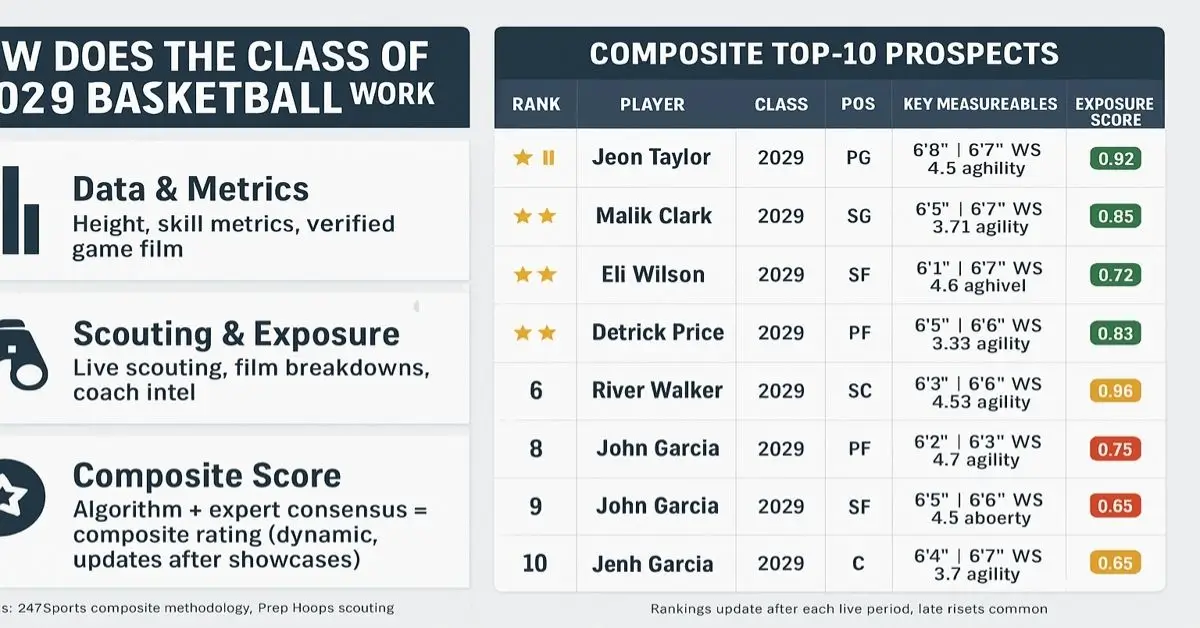
Rankings start with data height, skill metrics, and verified game film. Scouting services like Prep Hoops and Youth Hoops 360 compile player stats, exposure results, and coach feedback to build a composite view. Truth is, many prospects rise late. So rankings are fluid shifting after each showcase or live period. Recruiters use these shifts to identify players developing faster than their peers.
Top Trends in 2029 Recruiting
The 2029 cycle signals a shift: positional versatility and length dominate. Wings who can guard three spots and shoot above 35% from deep are skyrocketing up boards. In practice, that means 6 ‘4-6’ 6 hybrids like Flory Kuminga and Joshua Sanders set the new model size with pace and IQ. Coaches are also tracking vertical metrics and shot mechanics earlier to predict D1 readiness.
If you are interested in more visual and informational insights about class of 2029 basketball then try watching:
→”Top 40 Players in the Class of 2029 | You NEED to See!!“
How College Recruiters Use These Rankings?
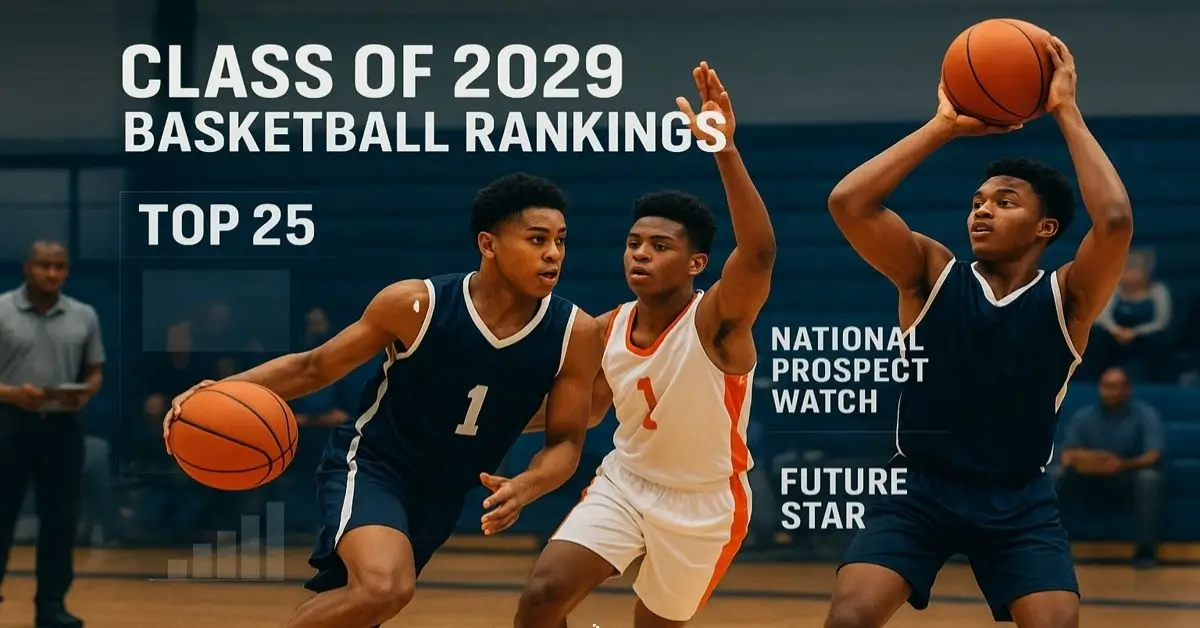
Recruiters rely on the class of 2029 basketball rankings as an early talent map. They flag players showing measurable year-over-year growth in speed, shooting, and body control. Think of it like a financial forecast; rankings aren’t commitments, but indicators of investment potential. Analytics teams now use performance models to cross-check upside across tournaments and EYBL data.
What High-School and AAU Coaches Look For?
Coaches use 2029 player rankings to plan rosters and exposure schedules. They analyze metrics like true shooting percentage, assist ratios, and win shares from verified games. The truth is, the smart programs don’t chase hype, they track development. A player who jumps from regional to national status by sophomore year usually signals elite coaching alignment.
What Parents and Players Should Understand?
For parents and players, class of 2029 basketball rankings offer direction not destiny. They reveal where a player stands among peers and what gaps to close. Parents often ask, “How can my kid get ranked?” The answer: verified event play, elite camps, and consistent film updates. Think of rankings as a progress audit, not a final verdict.
How Scouts and Analysts Use 2029 Data?
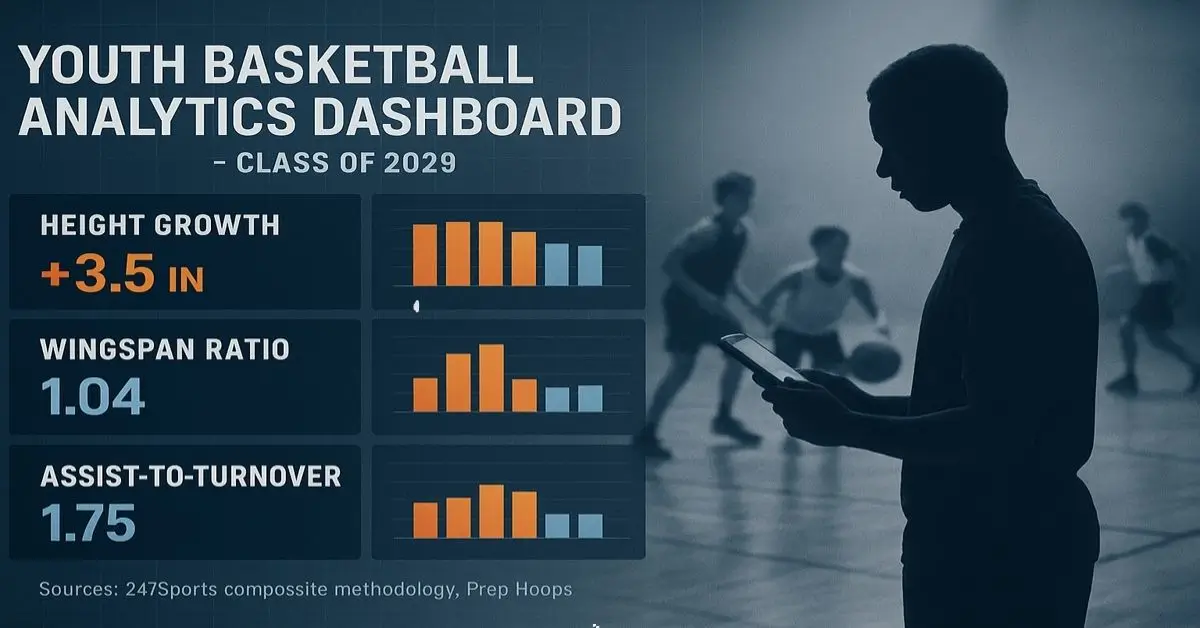
Recruiting analysts use 2029 data for trend signals, tracking growth spurts, regional dominance, and breakout consistency. Platforms like NXTGEN Hoops and On The Radar evaluate body mechanics and basketball IQ metrics. This data-driven approach helps them identify “risers” months before college interest peaks, giving scouts early leverage in talent prediction.
Local Media and Creators’ Role in Visibility
Content creators and sports reporters amplify player visibility. A viral highlight reel can shift perception overnight. Ever wonder why that is? Algorithms reward momentum. Consistent coverage builds digital equity for recruits, turning stats into stories that grab scouts’ attention.
Club Programs and Pipeline Metrics
Club directors measure success by how many ranked players they produce. The class of 2029 basketball rankings serve as their reputation scorecard. When multiple players from one club make the list, it validates coaching systems and boosts recruiting exposure across the program’s pipeline.
Sources
- ESPN Basketball Recruiting: Recognized globally for its in-depth player rankings and verified scouting reports on the nation’s top young athletes.
- Prep Hoops: A leading grassroots platform offering regional and national rankings, player profiles, and expert evaluations from across the U.S.
- 247Sports: A trusted name in college recruiting coverage, featuring data-driven analysis and composite rankings across major basketball classes.
- On3: A rapidly growing recruiting intelligence platform known for analytics-based scouting and accurate projections of future college commitments.
- NGS Hoops: A credible source for state-level ranking insights and detailed player spotlights within the Georgia youth basketball circuit.
Author Bio
Marcus Eddington is a Youth Basketball Analyst with an experience of 8+ years tracking prep prospects and national recruiting trends.